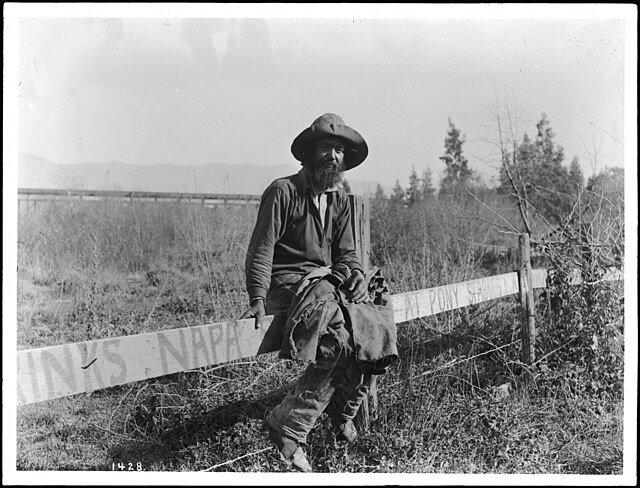
Hobo. Tramp. Bum.
The history of hobos, tramps and bums in the United States
The history of hobos, tramps and bums in the United States
Throughout history, there have been people who have eschewed society’s expectations and plotted a path of their own. This site is dedicated to preserving the rich, often misunderstood history of American hoboes, tramps and bums, who lived their lives off the grid, on the road and by rules of their own.
Explore the socioeconomic forces of the late 19th and early 20th centuries that gave rise to the great migrations of the unemployed, learn about the legal systems that criminalized vagrancy and offer a lens into how industrialization, war and capitalism all shaped this uniquely American subculture.
Whether you’re researching American hobo culture, fascinated by rail-riding legends or simply drawn to stories of freedom and survival, let us be your guide to the forgotten history of the American vagabond.
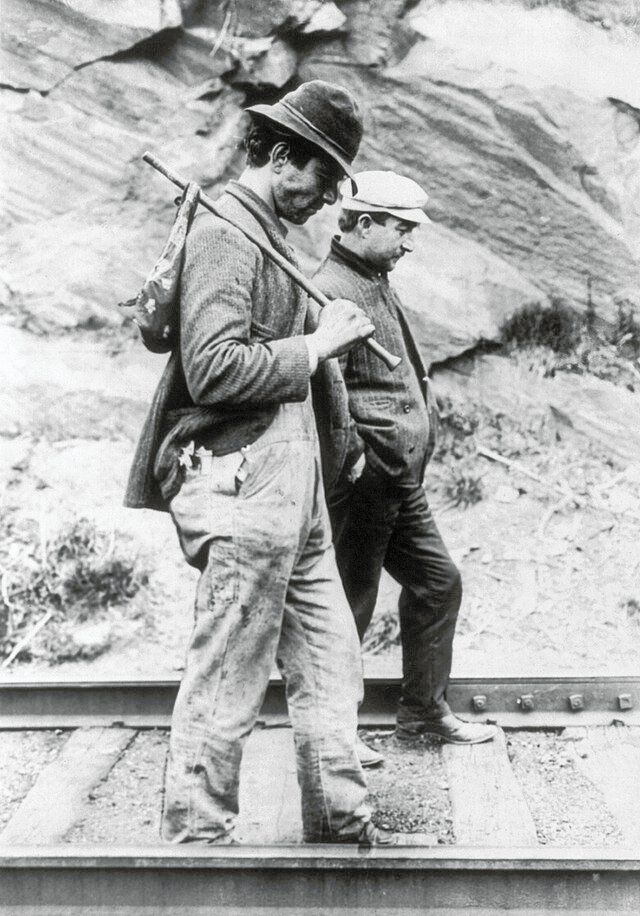
A hobo is a migratory worker who travels, often by freight train, in search of temporary jobs. Unlike tramps or bums, hobos are defined by their willingness to work wherever they can find it. Emerging in the late 19th century, hobos became a symbol of the American working poor, navigating the expanding industrial economy with resilience and resourcefulness. They developed their own code of ethics, slang and even visual symbols to communicate with one another. Hobos were not homeless by choice, but by necessity; they were part of a vast, moving workforce shaped by economic hardship and a hunger for opportunity.
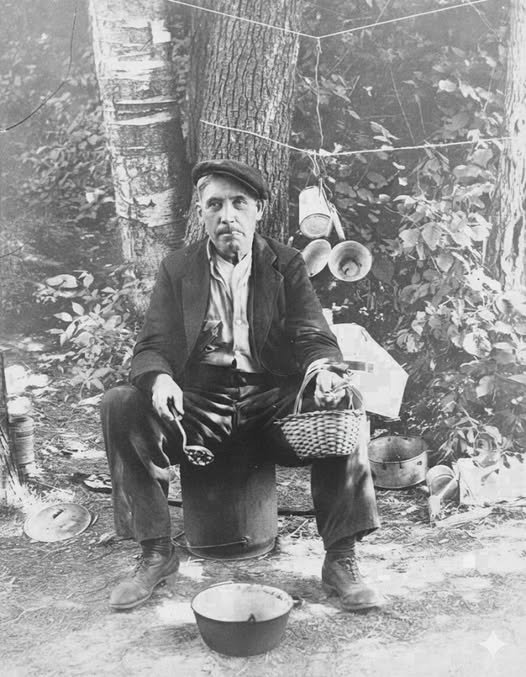
A tramp is someone who travels from place to place, usually without a fixed job. Unlike hobos, tramps are not necessarily looking for work. They are often seen as romantic figures of the open road, wandering for freedom, solitude or escape, rather than employment. They became prominent in the late 1800s and early 1900s, often driven by personal restlessness or alienation from society. While tramps might take odd jobs along the way, their identity is more about movement than labor. In American folklore, the tramp often appears as a poetic outsider, drifting through a world that’s always just out of reach.
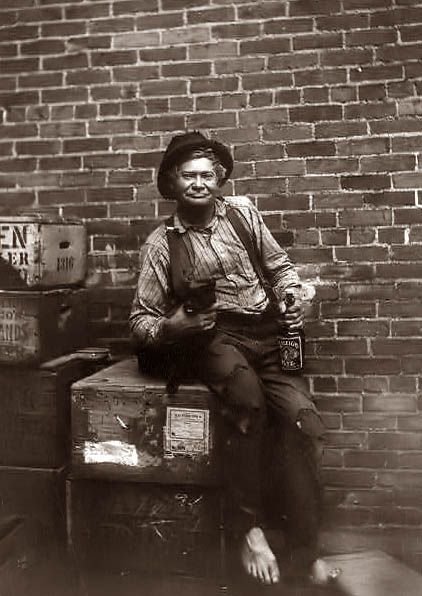
A bum is someone who doesn’t travel, doesn’t work and typically lives in a fixed area, relying on panhandling, charity or informal means to survive. Often viewed harshly in contrast to hobos and tramps, bums were frequently targeted by vagrancy laws and public scorn. While the term is often used dismissively, it reflects a group of people who have been pushed to the margins of society, often due to addiction, mental illness, or extreme poverty. In the hobo-tramp-bum hierarchy, the bum is sometimes seen as the lowest rung; but, like the others, bums reveal much about the society that shaped them.